Loading and unloading heavy furniture, kitchen appliances or packed cartons from delivery trucks and vans comes with a long list of risks. Removalists frequently lift, push, pull and maneuver awkwardly shaped goods, risking spinal injuries, severe back strain and muscle tears. Falls, slips, cuts, grazes and being struck or even crushed by heavy items also account for a large portion of injuries in an industry with some of the highest worker compensation rates.
To ensure safer loading and unloading, the right material handling equipment, including hand trucks, trolleys and dollies paired with dedicated ramps, provides smoother transitions between delivery vehicles and the ground. It also improves handling control and, most importantly, reduces strain and fatigue associated with heavy lifting.
While the importance of the right handling equipment cannot be understated, pairing it with a high-strength walk up ramp featuring a textured, non-slip surface matched to your load and vehicle greatly reduces slipping, tripping and fall hazards. It creates a gentle incline and a stable foundation for safer, faster and more efficient loading.
The Basics of Walk Up Ramps
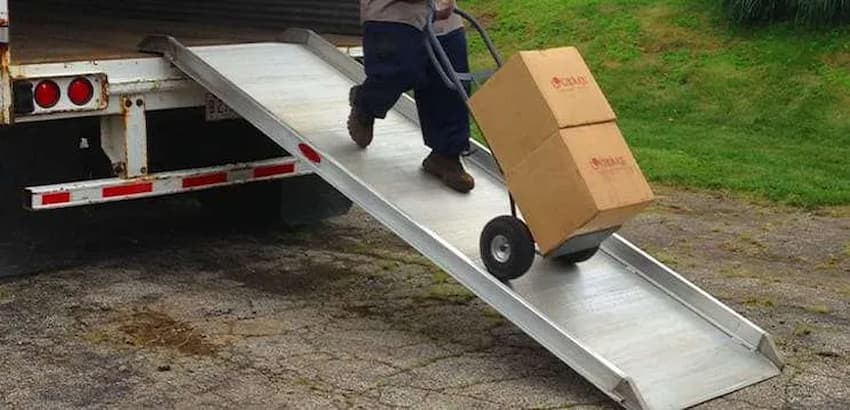
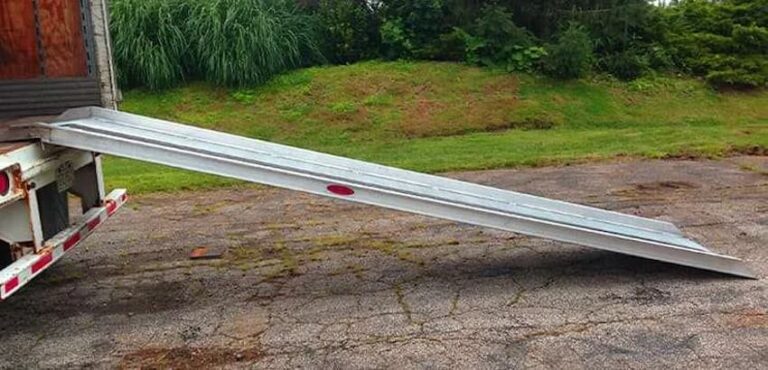
In its basic form, a walk up or removalist ramp is a portable or semi-permanent loading ramp, usually constructed of aluminium. With loading capacities averaging between 300 and 1000 kilos, and lengths ranging between 1 and 3 metres, the ramps allow removalists to walk straight up into vehicle beds or containers without having to resort to jumping, climbing or using separate ladders.
Simple, effective design choices deliver safety and ease of use. Constructed from lightweight, corrosion-resistant aluminium, these ramps provide the strength required for both foot traffic and heavy items. The wide, single-piece platform simplifies equipment use, while reinforced ribbing and under-mounted trusses evenly distribute weight to prevent buckling under heavy loads.
Additional features streamline safe loading and unloading. Anti-slip treads, in the form of punched holes, raised serrations, or textured inserts, create much-needed traction, keeping shoes, trolley and hand truck wheels firmly in place, and preventing slips in rain or mud. Raised side rails prevent equipment from rolling off and secure anchoring points – consisting of safety pins and chains – that lock the ramp firmly against the truck bed.
Benefits They Provide
With manageable weight, strong build, and high load capacities, walk ramps are indispensable tools for one-off or frequent loading and unloading tasks. They limit injuries, shorten moving times, protect items from damage and safely handle heavier loads. Key advantages over other equipment and ramp types include:
- Lightweight handling: Aluminium has a low metal density, making it up to 60 per cent lighter than steel. Even the largest ramps top out at under 50 kilos, making them easy to move and set up. Compare this to steel loading ramps of the same length and width, which weigh twice as much.
- High loading capacities: Despite being light, an aluminium walk ramp doesn’t skip on tensile strength. Even smaller and shorter ramps can handle the weight of hefty furniture pieces or larger appliances, along with the weight of the removalist and material handling equipment. Loading capacities range from 300 kilos to over a tonne in larger variants.
- Weather and rust-resistance: Unlike steel, aluminium naturally resists corrosion, so it doesn’t require anti-rust coatings to handle rain, road spray, or mud. The material lasts longer in typical humid Australian conditions, without staining or degrading.
- Improved safety and traction: The textured or perforated surfaces eliminate the risks of slips and falls, and provide traction for trolleys and hand trucks.
This makes them staples for furniture movers and removalists, delivery companies, warehouse operators, tradespeople and event organisers.
What to Consider When Buying
Length and Incline
To choose a ramp in the correct length, measure the vertical height from the ground to the truck bed. Ramps that are too short create a steep, dangerous incline that also complicates moving heavier items. A longer ramp provides a more manageable incline, reduces physical strain when pushing items up, and keeps tall cargo stable during transitions. To eliminate guesswork, safety guidelines generally recommend a maximum slope between 10 and 15 degrees for safe manual loading and walk up ramp use.
Width
To accommodate wider material handling equipment, ramps must also be of adequate width. Standard ramps average between 700mm and 800mm, with wider units topping 1000mm, allowing extra-wide loads or multiple removalists. Ensure you measure ramps for usable widths – generally the distance between the side rails.
Secure Connections
Ramps must lock firmly to the rear of vehicles to avoid kicking out or moving under load. Look for units with flat connection plates and heavy-duty steel connecting pins that secure the ramp in the pre-drilled holes of truck bed floors. Alternatively, consider hook connections for beaver tail trailers or standard rest-on lips for vehicles that don’t use pins.
Quality Standards
Verify that the equipment meets relevant Australian workplace health and safety (WHS) manual handling requirements and commercial load limits. Look for manufacturers that provide test certificates or compliance documentation for peace of mind under heavy daily use.