4WD adventures can be unpredictable, but your campsite doesn’t have to be. Comfort and convenience are something you can sort out ahead of time when camping with your off-roader. Speaking of that, a 4WD awning tent lets you have both in one effortless setup.
What Is a Car Awning Tent?
If an awning provides shade, a car awning tent turns that shade into a practical, enclosed space. It’s like a bonus room attached to your vehicle’s mounted awning.
But don’t confuse them with standalone camping tents. Unlike standard camping tents, which you can pitch anywhere, 4×4 awning tents usually rely on your vehicle’s awning for structure and stability (although freestanding models can be set up independently).
Why Invest in One?
As mentioned earlier, comfort doesn’t have to be left behind when you head off the beaten track. When attached to your vehicle’s awning, a 4WD awning tent extends your setup into a practical base camp on the go. It’s not full-on glamping, but rather than roughing it in the car, you’ve got an enclosed spot to cook, change, stash gear, or kick back without worrying about the weather.
While comfort makes camping enjoyable, convenience makes it effortless. Since most awning tents are designed for quick setup and easy takedown, you don’t have to deal with tangled poles or complicated instructions.
Many models fold or roll out in minutes, attach securely to your vehicle, and provide a practical, sheltered space without any complicated assembly. Plus, with options that can be used free-standing, you’re not tied to your 4WD for shelter.
Types
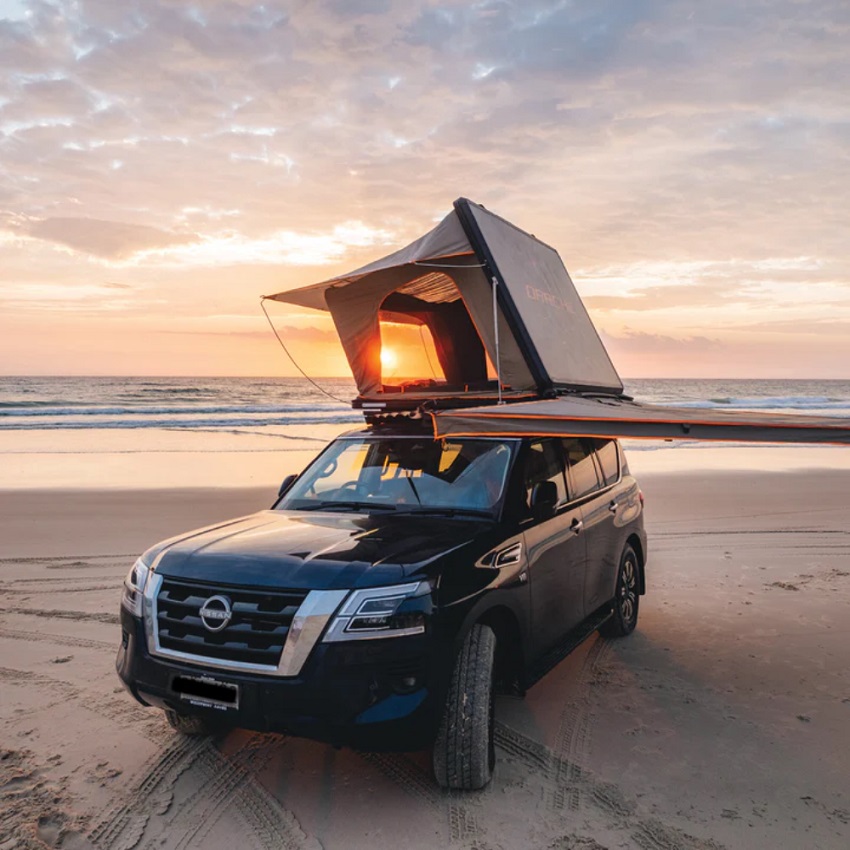
Awning tents come in different designs with varying levels of shade, shelter, and enclosed space.
Traditional roll-out models attach to the side of your 4WD awning and usually roll out or fold down on telescopic poles. They’re lightweight, compact and easy to set up. If you’re looking to create a simple, sheltered space without extra bulk, this is a great solution.
Another popular style worth checking out is the envelope or fold-out tent. This type unfolds from a compact box or envelope-style case, often with fabric floors and walls already built in. It offers more enclosed shelter and usable space, making it ideal when you want more than just shade.
Hard-shell or semi-rigid tents use a rigid base or shell that pops open into a tent, sometimes with a roof panel or fold-out sidewalls. They’re durable and great for windy conditions.
Free-standing awning tents can be attached to your 4WD awning or stand independently with poles and pegs. The biggest perk of free-standing awning tents is flexibility. You can leave them set up when you want to drive away for errands or to explore, or use them completely separate from the 4WD.
Campers who want extra sheltered space away from the vehicle or need a versatile setup for multiple stops will find this type of awning tent most suitable for their 4WD camping trips.
Next, side rooms are extensions that attach to your main awning tent. If you’re looking to get more space and privacy, these extensions can come in handy. Families on longer trips who need separate areas for sleeping, gear, or shade would find these useful.
Features
When shopping for a 4WD awning tent, it’s easy to get distracted by flashy marketing claims. Instead, focus on what really matters, like the fabric quality. On that note, look for durable materials like polycotton canvas, a blended fabric made by combining polyester and cotton fibres. While cheap fabrics can fade and tear, this blend combines strength and tear‑resistance (from the polyester) with the breathability and feel of cotton.
Ripstop polyester is another popular material. Its fibres are woven together to form a grid pattern that helps reduce rips and tears. This material is durable, resistant to abrasion, stretching, and shrinking.
Some tents use polyester with a polyurethane (PU) coating. That helps waterproof the tent and resist UV rays. A good waterproof coating is essential since nothing kills a camping vibe faster than a soggy awning in a surprise downpour.
Next, mounting system compatibility is also something to consider before making a purchase. Make sure the awning tent you’re interested in works for your vehicle without turning installation into a headache. Some awnings come with universal brackets, while others are tailored to specific rack systems, so check before you buy.
Weight and packed size also matter. A bulky awning that hogs half your roof space might not be worth it if it means sacrificing room for other gear. And if you’re setting up and packing down frequently, a lighter awning can save both your back and your patience.
Finally, if you’re camping in wet conditions, make sure the tent you choose is fully waterproof. These tents have a coated fabric (like PU-coated polyester or ripstop) and taped seams to handle proper rain without leaking. Water-resistant options, on the other hand, can handle light rain or drizzle, but in a heavy downpour, the fabric or seams can start to seep, so double-check the waterproof rating before you buy.